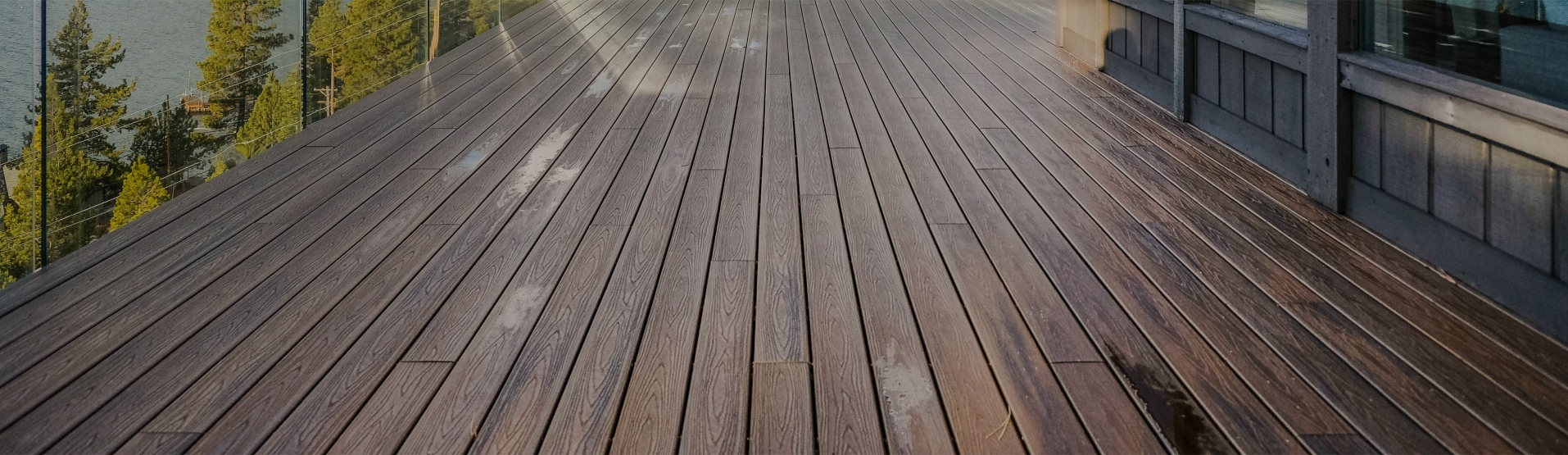
Composite decking has a reputation as the bulletproof option. Low maintenance, no staining, no splinters, basically wood that doesn’t need babysitting. All true. But that reputation makes people sloppy during the planning phase.
Wood forgives a rushed layout. Composite remembers. And it tells on you, slowly, usually around the two or three year mark, right when the warranty paperwork is buried in a drawer somewhere and nobody wants to deal with it.
So, let’s talk about where this actually goes wrong before you are the next stop.
Wood is stupid forgiving. Warped board? Swap it. Is the gap too tight? It will season out on its own. Composite doesn’t give you that grace period. It is a manufactured product, plastic fused with wood fiber, and it moves with temperature in ways solid lumber never will. Mess up the planning, and you are not patching one board. You are tearing out a whole section. Sometimes the whole deck.
The real cost isn’t the materials. It is the redo.
Every composite manufacturer publishes a gap specification. Almost nobody reads it.
Install boards tight on a cool spring morning and you’re setting yourself up for a buckling mess come August. Composite boards expand and contract with heat far more aggressively than wood does. Skip the gap, and that movement has nowhere to go but up. Or sideways into your fascia board, which then cracks.
Most brands want somewhere between 1/8″ and 3/16″ between boards, and slightly more at the ends, near walls, or against any fixed object like a post sleeve. Temperature at install matters too. A deck built in 40-degree weather needs different spacing than one built in July. That’s not a detail. That’s the whole game.
What worked for your old wood deck won’t work here.
Sixteen inches on-center was the gospel for a wood deck. Fine. But slap composite boards down on 16″ joists in a diagonal or picture-frame pattern and you’ll get bounce, sag, even visible waviness underfoot within a year. Most composite manufacturers require joists spaced at 12″ on-center for any angled installation, and some tighten that further for thinner board profiles.
Why does this trip up so many people? Because the framing crew and the decking crew are often different people working off different assumptions. The framer builds to code minimum. The composite boards show up three weeks later, and surprisingly the span tables don’t match. Read the manufacturer’s installation guide before a single joist goes down, not after.
Here’s the reality: nobody admires your joists. They admire the surface. So that’s where the budget goes, every time. Wrong move.
A deck can look flawless on top and rot from underneath within three years, because nobody flashed the ledger board or installed a proper moisture barrier on the joist tops. Water gets trapped, the substructure softens, and now you’ve got a gorgeous composite surface sitting on mush. Worse still, you usually can’t see it happening. By the time there’s visible sag, the damage is already structural.
Two neighbors. Same street, same sun exposure. Both bought “the same gray.” Eighteen months later, one deck looks brand new and the other has faded into something resembling driftwood. Different manufacturers, same color name on the swatch but wildly different fade resistance and surface density.
Composite decking isn’t one product. It’s a category with a massive quality spread. Cheaper boards use more recycled plastic film and less actual wood fiber, which sounds fine until you realize that affects scratch resistance, heat retention underfoot, and how the boards hold their color in direct sun. Don’t shop by swatch. Shop by warranty terms and actual product specification sheets.
Hidden fastener clips vs face screws, it’s not really a “pick whatever looks nicer” moment. It changes how the deck can breathe a little better, how it reacts with movement over time, and even whether you quietly void your warranty before you’ve hosted that first barbecue on it. Some folks treat the whole thing like a shortcut (mixing fastener brands with board brands) but it often ends in boards that squeak, pop-ups that show up too soon, and warranty claims that get denied because the install didn’t match the specification, not even by a little.
“It’s just a deck.” Famous last words. Skip the permit, and you might save a week and a few hundred bucks upfront. But try selling the house later, or filing an insurance claim after a structural failure, and that unpermitted deck becomes someone else’s leverage. Inspectors aren’t there to slow you down. They are the only outside check making sure your joists, ledger attachment, and footings actually meet code before you are standing on them.

You’ve read this far, which means you already know the cheap shortcut version of this project ends badly. The boards aren’t the problem. The plan is. Talk to someone who installs composite decking for a living before you buy a single board, not after the buckling starts.
If you’re in the planning stage and want it done right the first time, Fence Master has been building decks that actually hold up. So, get a real consultation instead of a guess.
For Free Estimate Book NowTypically, 1/8″ to 3/16″ between boards, more at fixed objects. Always check your specific manufacturer’s spec sheet first.
Only if they pass inspection, meet spacing requirements, and you add a proper moisture barrier. Don’t assume they’re fine.
Usually mismatched fasteners, thermal movement, or joists spaced too far apart. It’s a sign that something was installed incorrectly.
No. That’s the entire point of composite. Sealing is a wood-deck problem you no longer have.
25 to 30 years with correct installation. Most failures trace back to planning mistakes, not the material itself.