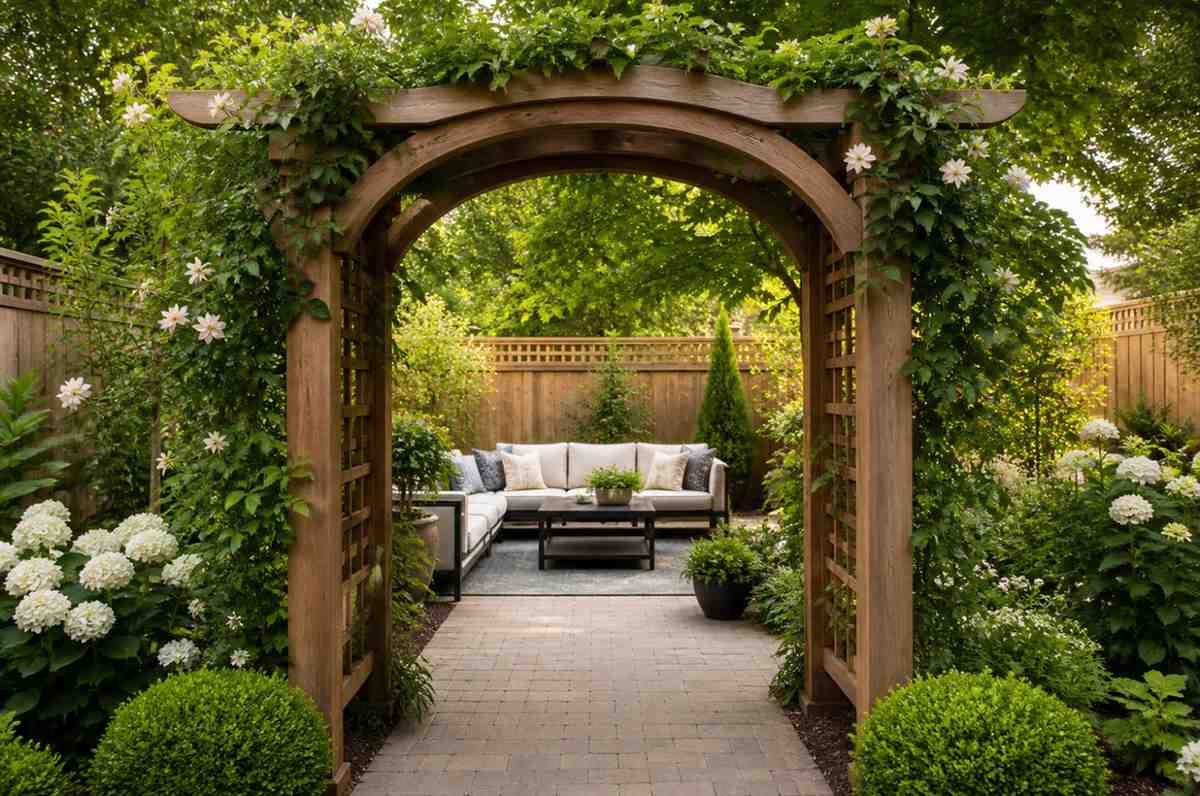
There is a moment in many backyards when everything feels a bit too open. The space contains many objects but lacks any sense of connection between them. A garden arbor typically enters at that point to transform the entire environment.
It does not involve tearing things apart or starting over. It stands there, simple & steady, and somehow brings shape to everything around it. That is the appeal. No major work. No mess. Just a smart addition that shifts how space feels.
An arbor functions as a vertical structure which may use lattice or trellis design elements. Some arbors feature a slatted roof design while others maintain an open roof design. They can be made from wood or metal because both these resources can be transformed into materials that resist atmospheric conditions.
An arbor functions as a picture frame positioned in your yard to define an area instead of holding a photograph. That simple idea can do more than expected.
Open yards can feel a bit flat. Everything blends together. An arbor adds just enough structure to break that pattern.
Imagine walking through a yard and passing under a metal arbor. Even if nothing else changes, that spot suddenly feels like an entry point. Step through it, and the space beyond feels different.
That shift happens because the arbor does a few quiet things. It:
Placement matters more than size or material. A well-placed arbor feels natural. A poorly placed one feels random.
This is one of the easiest wins. A garden arbor at the start of a walkway makes the path feel intentional, even if it is just a few steps long.
If your yard has a sitting area and a patch for plants or a vegetable garden, placing an arbor between them creates a soft divide.
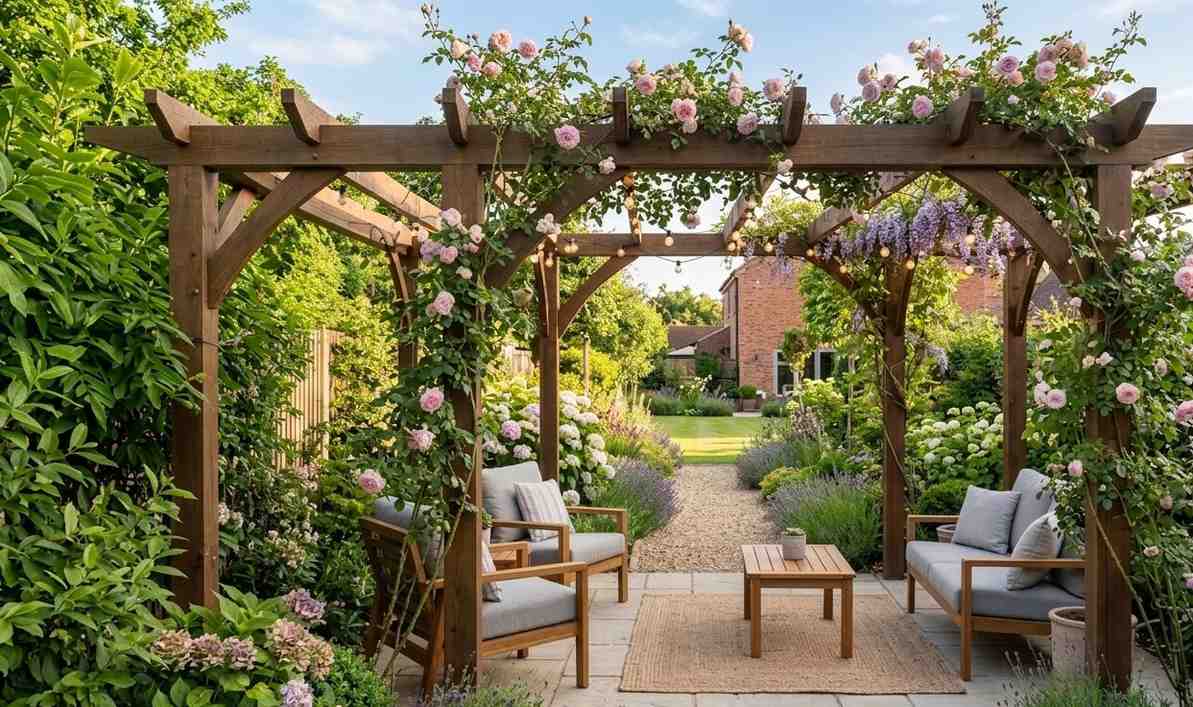
A freestanding structure can stand on its own in a yard. Add a few climbing plants, and it slowly turns into a living feature.
Placing one or two arbors along a path helps draw the eye forward. It gives direction without needing signs or borders.
The choice between wood and metal often comes down to style and upkeep. Both have their place.
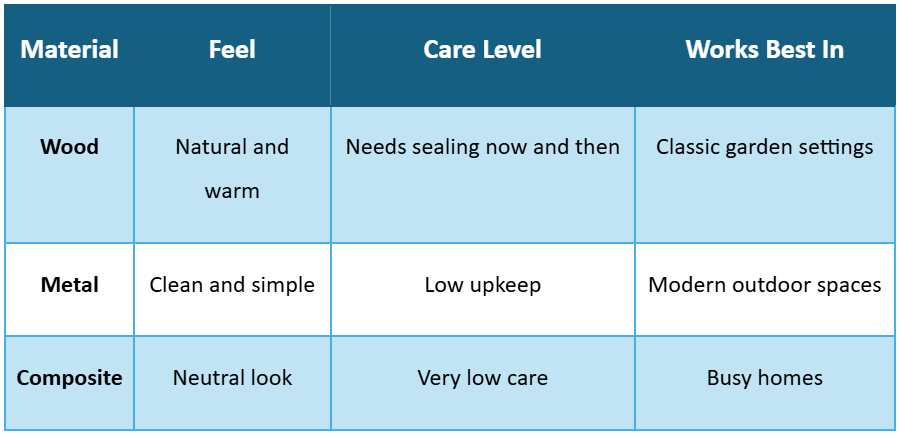
A metal arbor often lasts longer with less effort. Wood brings a softer look that blends into green spaces. Either can become the perfect arbor when it fits the surroundings.
Yes, and this is where things get interesting.
The installation of arbors creates support for climbing plants, enabling them to grow through lattice trellis systems. However, the process requires time to complete. At first, it looks a bit sparse.
Then one day, the vines begin to settle in. Leaves fill the gaps. Flowers start to show. That is usually when people pause and look a little longer than usual.
It stops feeling like something added later. It feels like it has always been there.
Every yard has its own rhythm. Some feel full and layered. Others feel open and simple. Arbors work in both.
In garden designs, they help connect different elements. They can sit between plants and seating areas or mark a shift from lawn to garden.
Here is how arbors help shape space. They:
In landscape design, balance matters. Too many features can crowd a space. Too few can leave it feeling empty. An arbor tends to land right in the middle.
They often work even better in tight spaces.
A smaller yard needs each element to do more. The garden arbor serves three purposes by creating space boundaries while adding vertical height and providing plant support.
A slim vertical structure keeps things open while still giving the yard a sense of shape. It is a simple way to make a small area feel more thoughtful.
Most arbors do not ask for much.
A weather resistant finish helps protect it from sun and rain. Wood may need a bit of care now and then. Metal usually needs little more than quick clean.
Once plants grow around it, the arbor blends into space. At that point, it feels less like something to maintain and more like part of the yard.
A yard does not need a full rebuild to feel complete. Sometimes it just needs one strong feature placed in the right spot. That is where an arbor makes a real difference.
Fence Master helps customers who want to establish an arbor in their space. We will help you choose the appropriate design which we will install and create an outdoor space that feels authentic and functional while maintaining clear boundaries.
A garden arbor adds structure without blocking views. It defines areas, guides movement, and supports climbing plants while keeping the space open and easy to move through.
A metal arbor usually needs less upkeep and lasts longer. Wood offers a softer, natural look. The better choice depends on style, climate, and how much care the arbor wants.
Yes, most arbors are simple to install. Many acts as a freestanding structure, which means no heavy digging or large changes to your yard layout.
Climbing plants grow gradually and can be shaped as they spread. With light trimming, they stay neat while still giving the arbor a full and natural look.
Place it at an entry point, along a path, or between zones. Even a small arbor can define space and make the yard feel more organized and intentional.